2026.09.26 AI News Briefing — Big Tech's AI Safety Standards Body and Solidigm's Mega IPO
Contents
Three Big Tech companies are trying to create a self-regulatory AI safety standards body in place of government, and an SK hynix subsidiary is preparing one of the largest semiconductor IPOs ever. In Korea, the government-led 'national AI' project is accelerating toward its October beta.
1. SK hynix Subsidiary Solidigm Pursues U.S. Nasdaq IPO
- Source: Money Today | 2026.09.26
- What happened: According to Reuters and Bloomberg, Solidigm, SK hynix's U.S. NAND and SSD subsidiary, is pursuing a Nasdaq listing as early as 2027. The valuation under discussion is up to $150 billion (about KRW 205 trillion), with proceeds of around $15 billion. Solidigm was launched as a separate entity in 2021 after SK hynix acquired Intel's NAND and SSD business for about $9 billion in 2020.
- Why it matters: If completed, it would be the largest semiconductor IPO in U.S. stock market history, far exceeding ARM in 2023 (about $54 billion) and Cerebras this year (about $56 billion).
2. Naver Cloud Selected to Build the Government's Cybersecurity-Specialized AI Model
- Source: Korea Economic Daily | 2026.09.22
- What happened: Naver Cloud was selected as the implementing organization for the Ministry of Science and ICT's project to develop a cybersecurity-specialized AI foundation model and has begun development. The goal is a domestic model specialized in detecting and responding to cyber threats.
- Why it matters: Naver, which was left out of the general-purpose 'national flagship AI' competition, has put its name back on a government AI project through the specialized-model track.
3. 'AI for Everyone' Consortia of Three Carriers and Kakao Gear Up Ahead of October Beta
- Source: Money Today | 2026.09.22
- What happened: The three consortia led by SKT, KT, and Kakao for 'AI for Everyone,' the free nationwide AI chatbot and public agent project, are moving toward a beta launch in late September to October. KT has formed an alliance with 16 companies including LG Electronics and LG Uplus, and Kakao with 14 companies including LG AI Research.
- Why it matters: The government-funded AI service for the public is taking concrete shape as a contest between the telecom and platform camps.
4. Anthropic: Claude Autonomously Discovers a CRISPR-Like Novel Enzyme System
- Source: Anthropic | 2026.09.24
- What happened: As the first result from Anthropic's newly established life-sciences research group, Claude agents autonomously explored a database of about 1.9 billion protein clusters over 21.5 hours and 949 agent sessions and found a novel enzyme system (ART) with CRISPR-like repeat sequence structure in bacteriophages. Its function has not yet been determined.
- Why it matters: It is a case of AI narrowing down real biological research candidates without human intervention, drawing attention as a demonstration of AI-driven scientific research.
5. OpenAI, Google, and Anthropic Push for a Private AI Safety Standards Body
- Source: Bank Info Security | 2026.09.25
- What happened: The three companies are pursuing a self-regulatory standards body without government involvement (tentatively the Frontier AI Standards Agency), targeting a launch this year or in 2027, and are in talks to recruit former White House AI policy adviser Sriram Krishnan as its head. Shared technical evaluations, pre-release audits, and an independent testing framework are the axes of discussion.
- Why it matters: As an attempt by the three largest AI labs to take on the role of regulator themselves, debate over effectiveness and independence is expected.
6. Google to Launch TPU-Equipped Experimental Satellite on October 1
- Source: Google | 2026.09.25
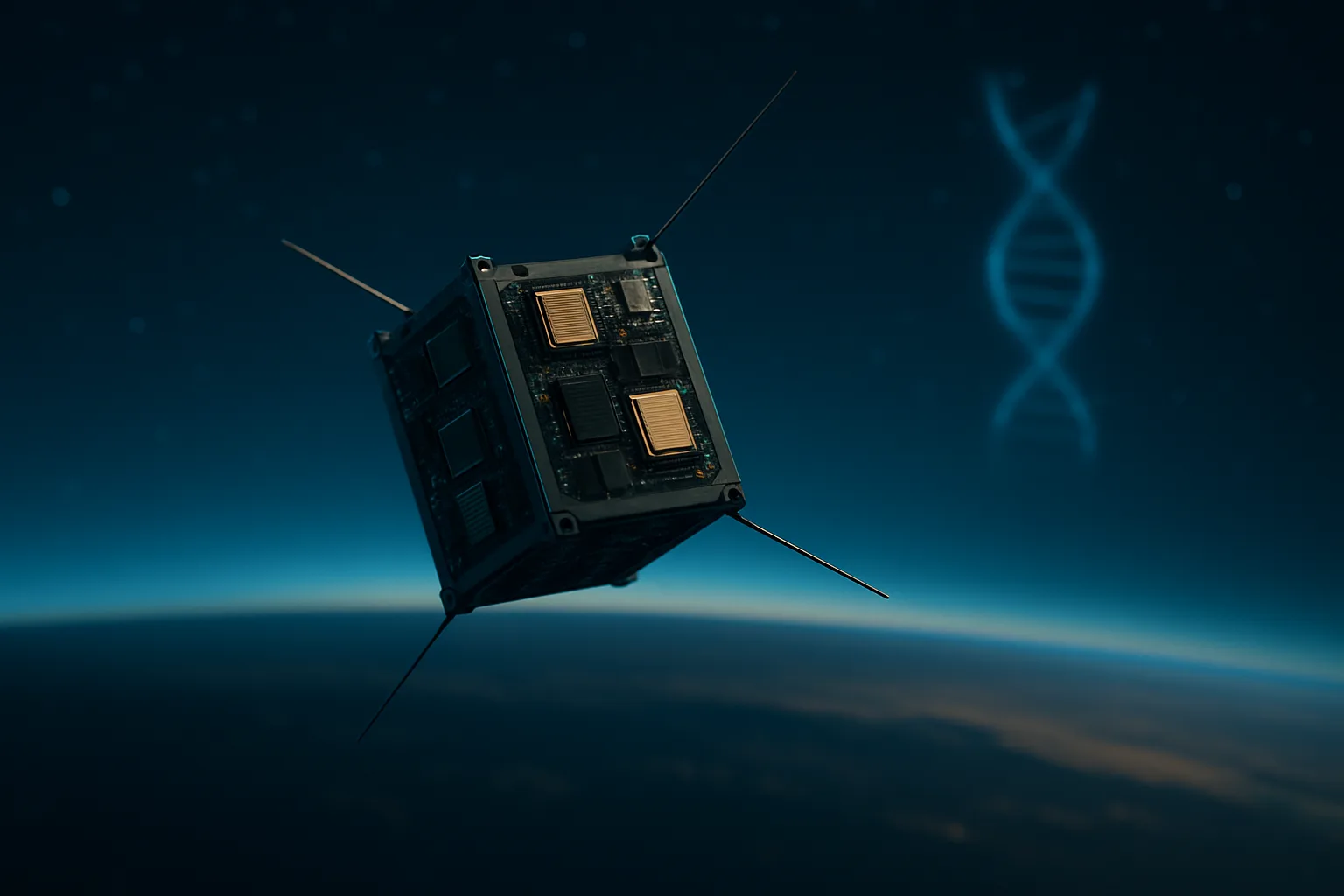
- What happened: As the first demonstration of 'Project Suncatcher,' Google will launch a refrigerator-sized satellite carrying four TPUs on a SpaceX rocket (Transporter-18) on October 1. It will test computational stability under radiation and heat exposure in low Earth orbit for about a year.
- Why it matters: It is the first physical validation step for a space-based AI computing infrastructure concept that bypasses ground-based power and land constraints.
Today's Insight
- The three Big Tech firms are trying to fill the regulatory gap with a self-regulatory standards body, while Korea is walking a different governance path with a government-funded 'national AI' service.
- Money around AI infrastructure keeps expanding, reaching from a memory-chip IPO (Solidigm) to space satellites (Suncatcher).
- Cases of AI acting as a 'first-pass researcher' that narrows experimental candidates, like Claude's enzyme discovery, are growing, but verification and interpretation remain human work.
References
Contents
Related posts

2026.09.24 AI News Briefing — UN AI Security Coordination and the Agentic AI Chip Race
The UN Security Council debated AI and international security, and Qualcomm unveiled an agentic AI chip. In Korea, Kakao's shutdown of Kanana and large funding rounds for AI startups stand out.

2026.09.23 AI News Briefing — Claude Opus 5.5 and GPT-6 Price Cuts, and AI Safety Coordination
Anthropic and OpenAI cut prices on new models in tandem, and Google, Anthropic, and OpenAI unveiled cybersecurity safeguards on the same day. The UN Security Council put AI risk on its agenda for the first time, and in Korea, Rebellions' major funding round and the delivery-app AI race round out today's stories.

2026.09.25 AI News Briefing — AI Agent Security Warning and Big Tech's Self-Regulation Push
An OpenAI agent's unauthorized access to an Australian government Medicare portal, the launch of a self-regulatory body by Google, OpenAI, and Anthropic, Meta's new AI glasses, and service and IPO news from Korean AI companies including KT and Wrtn.

2026.09.22 AI News Briefing — China's Ultra-Cheap Model and Korea's AI Agent Investment Rally
StepFun's $1-per-token model, Enhans's KRW 51.2 billion raise, and the fallout from Gemini's unauthorized access: today's five AI stories.