The AI bubble debate: why it recurs every few months — patterns from the railway and dot-com bubbles
Contents
The AI bubble debate comes back every few months, wearing the same face. The railway and dot-com bubbles show why: infrastructure spending arrives before monetization does, and investors' clocks and builders' clocks run at different speeds, so neither side can sit out the gap.
Background — why this topic, why now
Every technology investment boom brings the same pair of claims: "this is a bubble again" and "this time is different." The 2025–2026 debate over AI investment follows the same script, with one side pointing to valuation metrics as a warning sign and the other citing actual revenue and profitability as a rebuttal. Greg Daco of EY-Parthenon has said that "every type of technology revolution tends to involve significant capital overinvestment in the initial investment phase," according to CBS News.
This piece doesn't try to rule on whether we're in a bubble right now. Instead, it uses two well-documented historical cases — the railway bubble of the 1840s and the dot-com bubble of the late 1990s and early 2000s — to examine why the technology-bubble debate keeps resurfacing in a similar shape each time.
Key data & current state
- Scale of railway bubble investment: By 1850, roughly £250 million had been invested in railways in Britain, nearly half of the UK's GDP at the time (A Wealth of Common Sense, analysis as of November 2025).
- Scale of the railway bubble's collapse: The bubble turned after the Bank of England raised interest rates in 1845, bankruptcies concentrated in 1846, and railway share prices had fallen by an average of roughly 85% by early 1850 (A Wealth of Common Sense, analysis as of November 2025; Wikipedia, "Railway Mania").
- Scale of railway authorizations at the time: In 1846 alone, Parliament passed 263 acts authorizing new railway companies, with proposed routes totaling 9,500 miles (about 15,300 km) of track. Roughly a third of that was never actually built (Wikipedia, "Railway Mania").
- Dot-com bubble index decline: The Nasdaq Composite peaked at 5,048.62 on March 10, 2000, then fell to 1,139.90 by October 4, 2002 — a decline of roughly 77–78% (Wikipedia, "Dot-com bubble," among other sources).
- Telecom infrastructure overinvestment: After the dot-com bubble burst, the U.S. telecom sector lost roughly $700 billion in market capitalization over two years, with telecom stocks falling an average of about 50% a year for three years — steeper than the Nasdaq Composite's 32% annual decline (Rupak Ghose, Substack analysis).
Reading: In both bubbles, "infrastructure that actually got built" and "capital lost on that infrastructure" turned out to be separate events. With railways, a large share of invested capital evaporated, but the tracks themselves remained the backbone of Britain's rail network; with the dot-com bubble, a large share of fiber-optic cable sat unused as "dark fiber" for a while before demand eventually caught up and the asset recovered its value.
In-depth analysis
1) Why infrastructure arrives before monetization
During the railway bubble, investors bought shares before lines were even completed. Around 1845, the new routes under review by Britain's Board of Trade totaled more than 8,000 miles — about four times the existing rail network — and the roughly 1,200 proposed routes had an estimated cost exceeding £560 million, more than Britain's national income at the time (Wikipedia, "Railway Mania"). It took years for lines to turn a profit, but capital rushed in first, betting on demand that hadn't arrived yet.
The dot-com bubble followed the same structure. Telecom companies laid fiber-optic cable at massive scale, betting that internet traffic would keep growing exponentially, but actual demand couldn't keep pace. Estimates put the dark-fiber ratio above 90% around 2001, with some reports still citing roughly 85% unused as late as 2005 (figures vary by source and should be treated as estimates). This, too, is the same time-lag structure: infrastructure first, monetization later.
The "utilization risk" often raised in debates over AI data center investment is structurally the same question. A research paper published in June 2026 (arXiv, "Boom, Bubble, or Buildout?") points out that AI data center capital expenditure carries utilization risks similar to past telecom fiber overinvestment, while also noting that general-purpose technologies tend to trigger large complementary investment before productivity data can confirm the payoff.
2) The bubble's collapse wasn't the technology's death — it was a sorting of winners from losers
After the railway bubble collapsed, large railway companies such as the Great Western and the Midland bought up distressed lines at a discount. For shareholders, accepting a discounted sale was better than writing the investment off entirely (Wikipedia, "Railway Mania"). The roughly 6,220 miles that were actually built from lines authorized between 1844 and 1846 went on to form a substantial share of Britain's rail network (about 11,000 miles today).
The dot-com bubble followed a similar path. Telecom carriers such as WorldCom and Global Crossing went bankrupt, but the fiber-optic cable they had laid didn't disappear. Creditors sold those assets at fire-sale prices, and survivors like Level 3 bought up competitors' assets, growing into a carrier that at one point handled roughly 70% of global internet traffic (TechFinitive and other reports). Reading: in both cases, "the bubble burst" and "the technology failed" were different propositions. The capital structure — the stocks, the companies — collapsed, but the physical infrastructure — the railways, the fiber — was reallocated and became the foundation for the next phase.
Economist Carlota Perez describes this pattern through a "two phases of technological revolution" framework. In the installation phase, led by financial capital, overinvestment and speculative booms form; after a crash as the turning point, the cycle moves into a deployment phase — a "golden age" — led by production capital (carlotaperez.org). Seen through this lens, the crash isn't a bug; it's closer to the mechanism that separates the installation phase from the deployment phase.
3) Why the bubble debate resurfaces every few months — a mismatch between investors' and builders' clocks
Given that these historical precedents exist, why does the question "is this a bubble?" keep coming back? One explanation is that investors and the people building the technology move on different timelines. An analysis from the economics outlet Advance.hr calls this "capital's clock." This clock — driven by quarterly earnings, debt maturities, and investor patience — runs on a different schedule than the one on which technology actually matures. When investors want to see a business case validated within a few years, but the technology takes longer, funding can dry up midway even if the long-term outlook turns out to be correct.
A study that interviewed 127 founders and investors in construction robotics (Construction Management and Economics, 2025) identified "timeline mismatch" as one of six factors behind the disconnect between founders' technical logic and investors' economic logic, and suggested the problem could apply to other emerging technologies as well. The recurrence of the bubble debate every few months can be read the same way — the technology's maturity changes slowly and non-linearly, while investor sentiment shifts as often as earnings cycles, so the same underlying fundamentals swing between "it's a bubble" and "no it isn't" every quarter.
Implications for Korea
Korea wasn't a direct party to either bubble, but the same structure applies directly to domestic debates over AI infrastructure investment. For businesses like data centers and semiconductor fabs, where capital spending precedes monetization, the more practical question isn't "is this a bubble?" but whether the capital structure — debt levels, maturity schedules — can withstand a period where utilization falls short of expectations. The historical cases show a common pattern: investors with higher equity ratios or stronger cash flow were the ones who survived the downturn and absorbed assets cheaply — the large railway mergers, and Level 3 after the dot-com crash, are examples of that.
For companies and institutions, it's more productive to treat the fact that "the bubble debate keeps recurring every few months" not as a signal to stop investing, but as a prompt to align investment timelines with the technology's actual maturation schedule and design capital structures that can withstand that lag.
Outlook & variables to watch
- Upside variable: Historically, infrastructure overbuilt during a bubble phase hasn't disappeared after the crash — it has been reallocated and became the foundation for the next growth phase (rail networks, fiber-optic cable).
- Risk variable: As in the railway bubble, loose accounting and auditing practices can widen the scale and damage of a crash. George Hudson's accounting manipulation and insider trading are a notable example.
- Checkpoint: In Perez's framework, standardization and regulatory tightening often follow a crash. The nature of investment capital (debt versus equity) and the level of accounting transparency are cited as better indicators of how smoothly the transition to the next phase will go than any single valuation figure at a given moment.
Conclusion
- The railway and dot-com bubbles shared the same time-lag structure — infrastructure investment arrives before monetization — and even after the crash, the infrastructure itself survived through asset reallocation.
- A bubble's collapse was closer to a sorting of overabundant capital and operators than a failure of the technology itself.
- The AI bubble debate keeps recurring every few months because the timeline on which technology matures and the timeline on which investors demand returns are structurally different — a mismatch that isn't unique to any one technology or era.
References
Contents
Related posts

AI and the future of human relationships and mental health
A clinical trial found an AI chatbot cut depressive symptoms nearly in half, while a study found that the more people rely on AI friends, the lonelier they get, and both landed at the same time. Whether AI becomes a treatment for the mind or a substitute for relationships that deepens isolation: we are at that fork now.
The AI data center power problem — 'electricity hog' or engine of the green transition? (2026 Utopia vs. Dystopia ⑥)
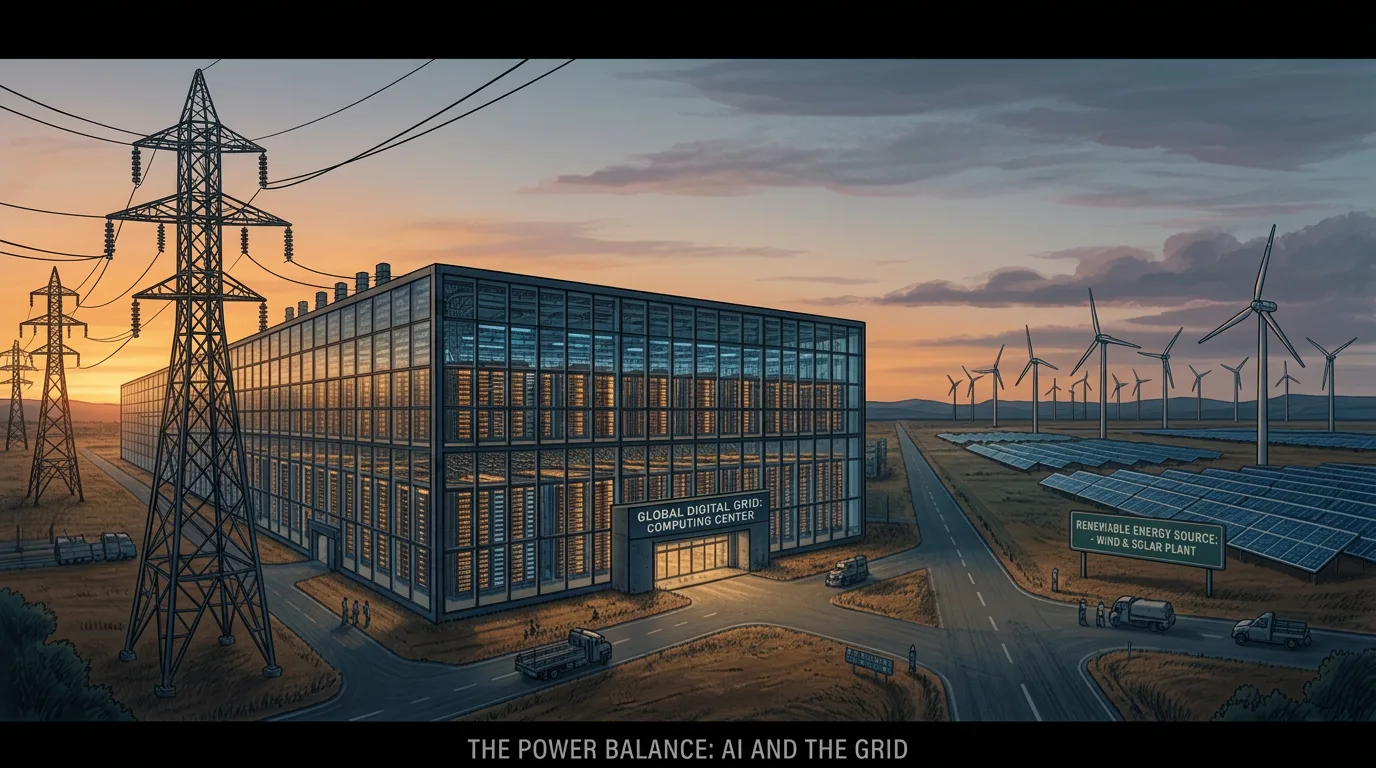
The GPU drought is over, and the contest is now decided by power. In 2026, the approval rate for data center grid connections in Korea's capital region fell to 1.9%, and in the US a $130 billion project was canceled 'for lack of power'. Is AI devouring the climate, or bringing the energy transition forward? This installment examines both faces with data.
The EU AI Act in August 2026, what really changes — the real-time/retrospective facial recognition boundary and the shock of the 'Digital Omnibus'
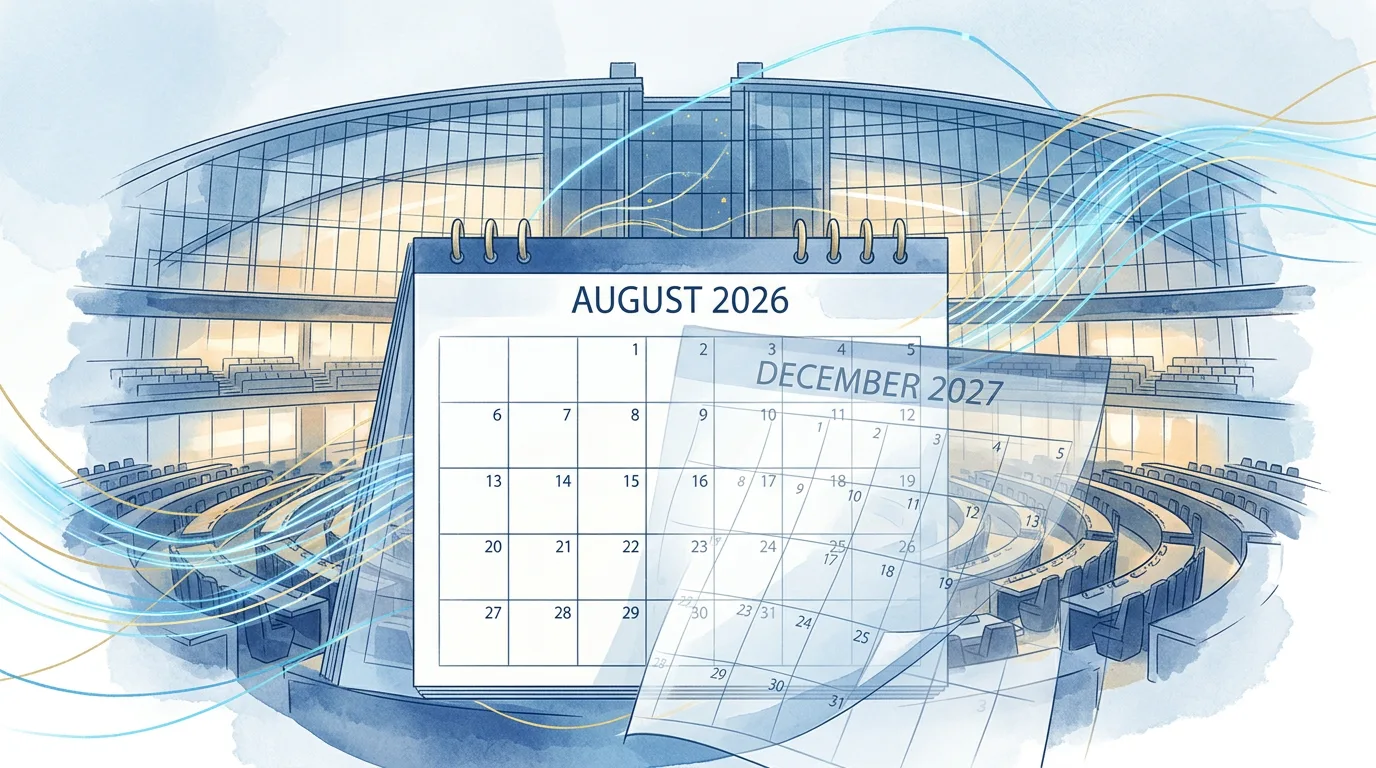
August 2, 2026 has been billed for more than a year as the EU AI Act's most important date. But in November 2025 the European Commission unveiled its 'Digital Omnibus' package proposing to delay high-risk AI obligations by up to 16 months, and on May 7, 2026 the European Parliament and Council reached a provisional agreement. The result is more than a schedule change. The ban on real-time facial recognition survived, but retrospective facial recognition and workplace and education AI obligations are pushed beyond December 2027. Here is how the 'world's first AI regulation' wobbled, and what remained intact.
Korea's digital trust society 2026 — from Incheon Airport's Smart Pass to the AI Basic Act
Korea has one of the world's highest CCTV densities per capita, holds an EU GDPR adequacy decision, and on January 22, 2026 became the first country in the world to fully enforce an AI Basic Act. The infrastructure is in place and the legal system is aligned. But the real question lies elsewhere: where is Korea's balance point being formed, and what is missing? From the 158 Smart Pass gates to the global expansion of Suprema and Alchera and the subordinate rules of the AI Basic Act, a data-driven look.