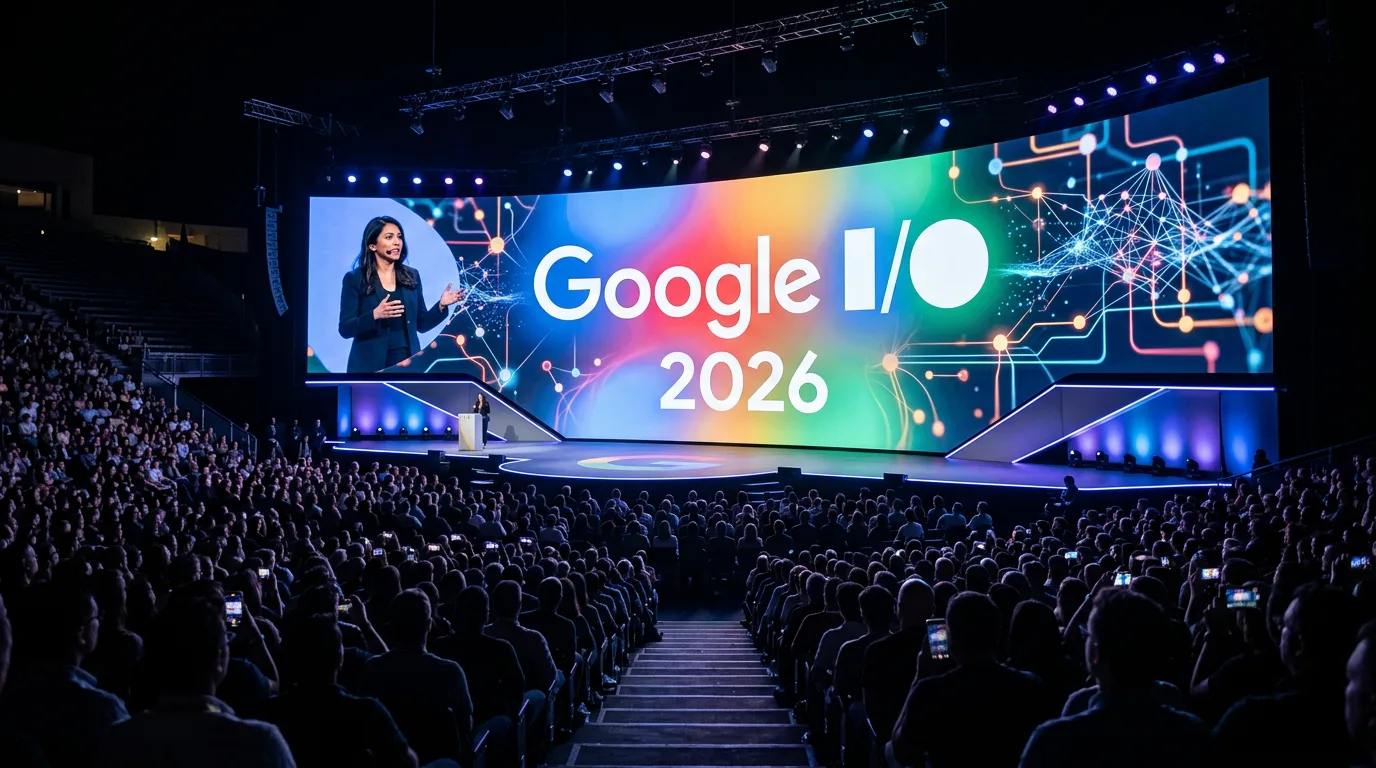
Google I/O 2026 recap — the Gemini 3.5 era and Google's 'agent full-stack' blueprint
Contents
Google I/O 2026 recap — the Gemini 3.5 era and Google's 'agent full-stack' blueprint
Google I/O 2026, held on May 19 (local time) at the Shoreline Amphitheatre in Mountain View, came down to one message: 'from assistant to agent'. From Gemini 3.5 Flash, Spark, and Antigravity 2.0 to Android XR glasses and the overhaul of Search, here is a one-stop summary of the message Google delivered as a full-stack AI company.
Background / why this event matters now
This year's Google I/O went beyond a product launch; it showed how Google defines the next phase of the AI cycle. CEO Sundar Pichai said 'we have entered a stage where people want to see the value of AI in the products they use every day', stressing that the 'AI first' strategy pursued over the past decade has now reached the stage of real-world use.
In particular, with GPT-5.5 (OpenAI) and Claude Opus 4.7 (Anthropic) leading in agent workflows and coding benchmarks respectively, Google played its differentiation card: 'frontier performance × speed and price × full-stack integration'. The core of the event was showing on a single stage a vertically integrated structure running from 8th-generation TPUs (8t/8i) through models, the development platform, consumer apps, and hardware (smart glasses).
Another notable change is pricing. By cutting the entry price of AI Ultra to $100 a month, half the previous level, Google has kicked off a premium AI subscription price war with OpenAI and Anthropic.
Key data and current state
- Gemini app monthly active users (MAU): Passed 900 million, doubling year on year (Google, 2026)
- Products with 1 billion+ users: 13 (5 of them with 3 billion+ users) (Google, 2026)
- AI Overviews monthly users: 2.5 billion (Google, 2026)
- Google annual CapEx: About $180–190B (roughly 6x the $31B of 2022) (Google, 2026)
- New AI Ultra plan: $100 a month (an entry tier 50% below the previous $200 plan) (Google, 2026)
? Interpretation: Gemini's 900 million MAU shows that over the past year Google achieved the steepest growth of any company in terms of 'service penetration'. At the same time, CapEx around $180B signals that Google remains in the top tier of Big Tech in infrastructure (TPU and data center) investment, and the AI Ultra price cut reads as direct price pressure on the premium tiers of OpenAI and Anthropic (in the $200-a-month range).
In-depth analysis
1. The Gemini 3.5 family — "Frontier Intelligence with Action"
On the model side, the star of the show was Gemini 3.5 Flash. Google defined this model with the phrase 'frontier intelligence plus action', which signals a shift from a simple response model to one optimized for long-horizon tasks and agentic coding.
According to the official announcement, Gemini 3.5 Flash outperforms Gemini 3.1 Pro on coding, agent, and multimodal benchmarks, scoring 84.2% on CharXiv Reasoning. Google also said it delivers about 4x the output speed of comparable frontier models.
Gemini 3.5 Pro is slated for release in June, Google said.
According to industry analysis (including the author's view), as of May 2026 GPT-5.5 still leads in agent workflows and Claude Opus 4.7 in coding benchmarks (SWE-bench Verified and others), so Gemini 3.5's differentiator appears to be a value positioning of "near-flagship performance at Flash price and speed".
2. Gemini Spark — the arrival of the '24/7 personal AI agent'
The most talked-about new product was Gemini Spark. It monitors Gmail, Calendar, Tasks, and third-party apps in the background and performs tasks even when the user doesn't open the Gemini app, an always-on (24/7) personal AI agent.
Technically, Spark runs on Gemini 3.5 Flash plus the Antigravity 2.0 harness, executing on dedicated virtual machines (VMs) in Google Cloud. In other words, work continues even when the laptop lid is closed or the phone is off. Give it a task by voice and it handles email drafting, schedule coordination, and multi-step scheduling in the background, notifying the user on completion.
Rollout is staged. It goes to trusted testers first this week, and from next week it opens as a beta for Google AI Ultra subscribers in the US ($100 and $200 tiers) . Chrome integration and a Mac app extension are planned for this summer, and both Android and iPhone are supported. A global expansion schedule has not yet been announced.
3. The biggest overhaul of Search in 30 years — "Search box → AI agent hub"
Google described the change to Search as "the biggest upgrade in nearly 30 years". With Gemini 3.5 integrated into Search, the search box is no longer a place to type keywords but an interface that helps refine your question and handles follow-up queries chatbot-style.
The key new features are as follows.
- Search Agents: Multiple agents work in the background to plan schedules, track real-time stock price movements, and carry out complex tasks
- Universal Cart: AI tracks prices and restocks across multiple apps and sites for a unified shopping experience
- Ask YouTube: Explore YouTube videos through natural-language conversation
- SynthID verification: Identify AI-generated content via Circle to Search and Chrome's right-click menu
4. Antigravity 2.0 and the developer ecosystem — an 'agent-first' development platform
On the developer side, the centerpiece is the global launch of Antigravity 2.0. Antigravity 2.0 and the newly added Antigravity CLI provide subagent orchestration, cross-platform terminal sandboxing, credential masking, and stronger Git policies.
The other major development tools unveiled are as follows.
- Google AI Studio upgrade: Native Kotlin support (vibe coding), one-click Cloud Run deployment, Firebase integration
- Managed Agents (Gemini API): A fully provisioned agent with a remote sandbox from a single API call
- Android Bench: An LLM leaderboard for Android development tasks (with open-weight models such as Gemma 4 added)
- Code Mender: A security agent that automatically finds and patches vulnerabilities in codebases (in expert testing)
5. Android XR glasses and 'Intelligent Eyewear'
On the hardware side, Android XR smart glasses developed with Samsung, Warby Parker, and Gentle Monsterwere unveiled. The live demo showed tapping the glasses to ask where a friend is, and ordering coffee through Gentle Monster sunglasses and paying the tip by voice.
It also demonstrated Nano Banana (the image generation and editing model) working with the glasses: take a photo, edit it instantly, and preview it on a connected Google watch. Launch is slated for fall 2026, but exact pricing was not disclosed.
6. Pricing overhaul — from 'daily limits' to a 'compute-used' model
Google said it is switching the Gemini app's billing from daily prompt limits to a 'compute-used' basis (the amount of computing resources consumed). Text messages deduct few resources, while video editing and agent tasks deduct many.
On reaching the limit, it automatically switches to the lighter, faster Gemini 3.5 Flash, and AI Pro and Ultra subscribers who want more can purchase pay-as-you-go creditsseparately. The new $100 AI Ultra plan includes the following.
- 5x the Gemini app and Antigravity usage limits of the AI Pro plan
- Gemini 3.5 Flash integration and priority access to Antigravity
- 20 TB of cloud storage and a YouTube Premium individual plan
- (In the US) Gemini Spark beta access (from next week)
Implications for Korea
The implications of this event for the Korean market run along three lines.
First, the agent OS race begins in earnest. Gemini Spark competes head-on with OpenAI's GPT agents and Anthropic's Claude Code and computer use features, and becomes a direct benchmark for the in-house AI agent strategies Korean companies are pursuing (Naver's HyperCLOVA X agents, Kakao's Kanana, Samsung's Galaxy AI, and others). In particular, the 'runs on a cloud VM even when the device is off' architecture suggests that Korea's device camp (Samsung), which has focused on on-device AI, needs to bolster its cloud backend.
Second, the ripple effect of the AI subscription price war on the Korean market. The $100 AI Ultra entry price sits in a range directly comparable with OpenAI Plus ($20) and Pro ($200) and Anthropic Max ($100 and $200), so a reshuffle of SaaS-style AI subscription pricing is expected in Korea too. The shift of pricing toward 'compute-used' metering is likely to affect pricing models for Korean B2B AI services as well.
Third, Samsung's XR glasses collaboration. With Samsung Intelligent Eyewear included in the first commercial Android XR lineup, Samsung now holds one pillar of a multi-device AI ecosystem spanning phone, watch, and glasses. With pricing and launch dates undisclosed, however, actual market success will be decided after the official launch this fall.
Outlook and variables to watch
- Positive variables: Gemini's steep growth to 900 million MAU, infrastructure advantage based on 8th-generation TPUs, capacity for $180–190B in CapEx investment
- Risk variables: No single-benchmark lead over GPT-5.5 (agents) and Claude Opus 4.7 (coding), privacy concerns over Spark's access to Workspace data (the Thele v. Google class action filed in November 2025 is ongoing), uncertainty over the global rollout schedule
- Checkpoints:
- Official release of Gemini 3.5 Pro in June
- Timing of Gemini Spark's global (especially Korean) expansion
- Android XR glasses pricing and release date
- Developer adoption of Antigravity 2.0
- Actual user response to compute-used billing
Conclusion
The message of Google I/O 2026 is clear.
First, Google has formalized its transition from 'assistant' to 'agent'. Gemini Spark is its symbolic product.
Second, full-stack integration is Google's differentiating weapon. The vertical integration running from TPU → Gemini 3.5 → Antigravity → Search, Workspace, Android, and XR is a structural asset competitors will find hard to match in the short term.
Third, the $100 AI Ultra price cut is not mere marketing but a strategic decision to capture market share. The question now is not 'can Google ship a new model' but 'how much of Gemini's 900 million MAU can it convert into actual agent usage'.
Contents
Related posts

AI and the future of human relationships and mental health
A clinical trial found an AI chatbot cut depressive symptoms nearly in half, while a study found that the more people rely on AI friends, the lonelier they get, and both landed at the same time. Whether AI becomes a treatment for the mind or a substitute for relationships that deepens isolation: we are at that fork now.
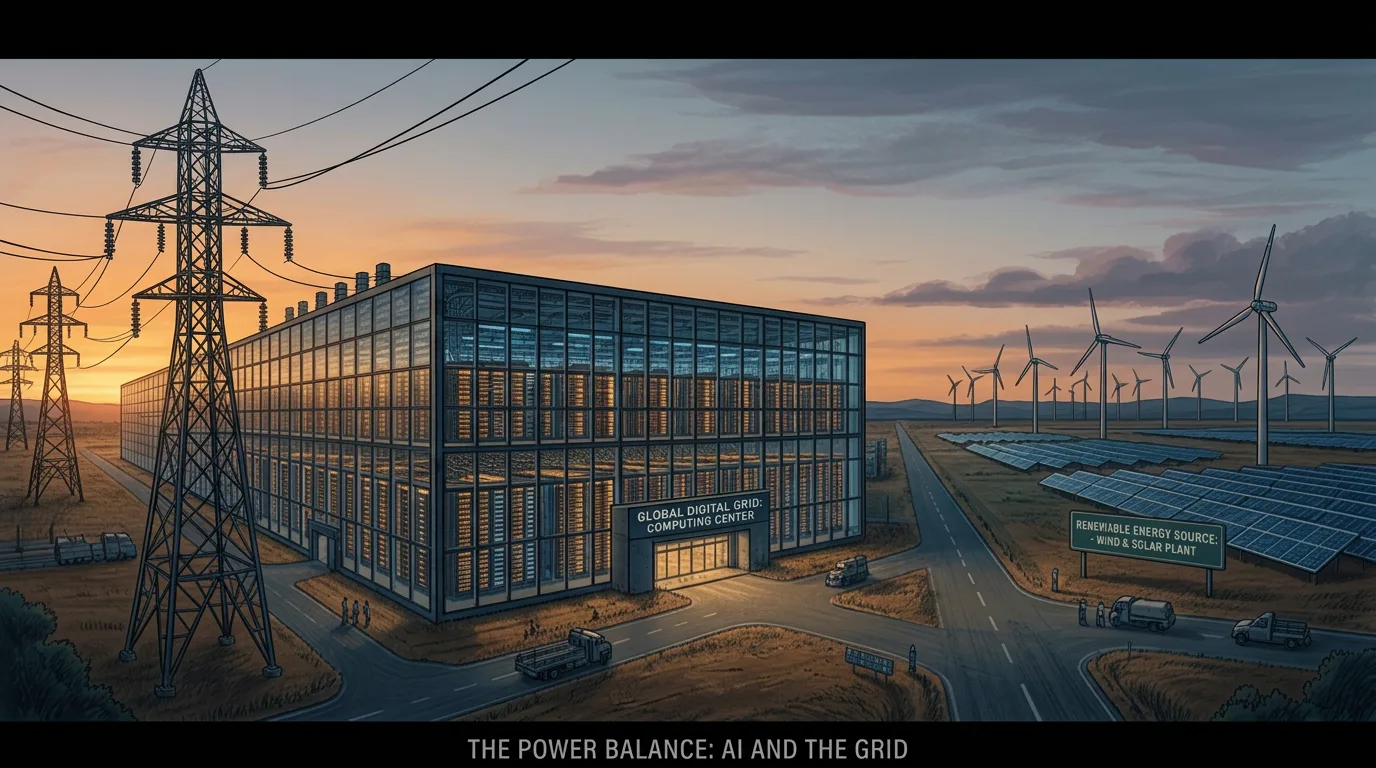
The AI data center power problem — 'electricity hog' or engine of the green transition? (2026 Utopia vs. Dystopia ⑥)
The GPU drought is over, and the contest is now decided by power. In 2026, the approval rate for data center grid connections in Korea's capital region fell to 1.9%, and in the US a $130 billion project was canceled 'for lack of power'. Is AI devouring the climate, or bringing the energy transition forward? This installment examines both faces with data.
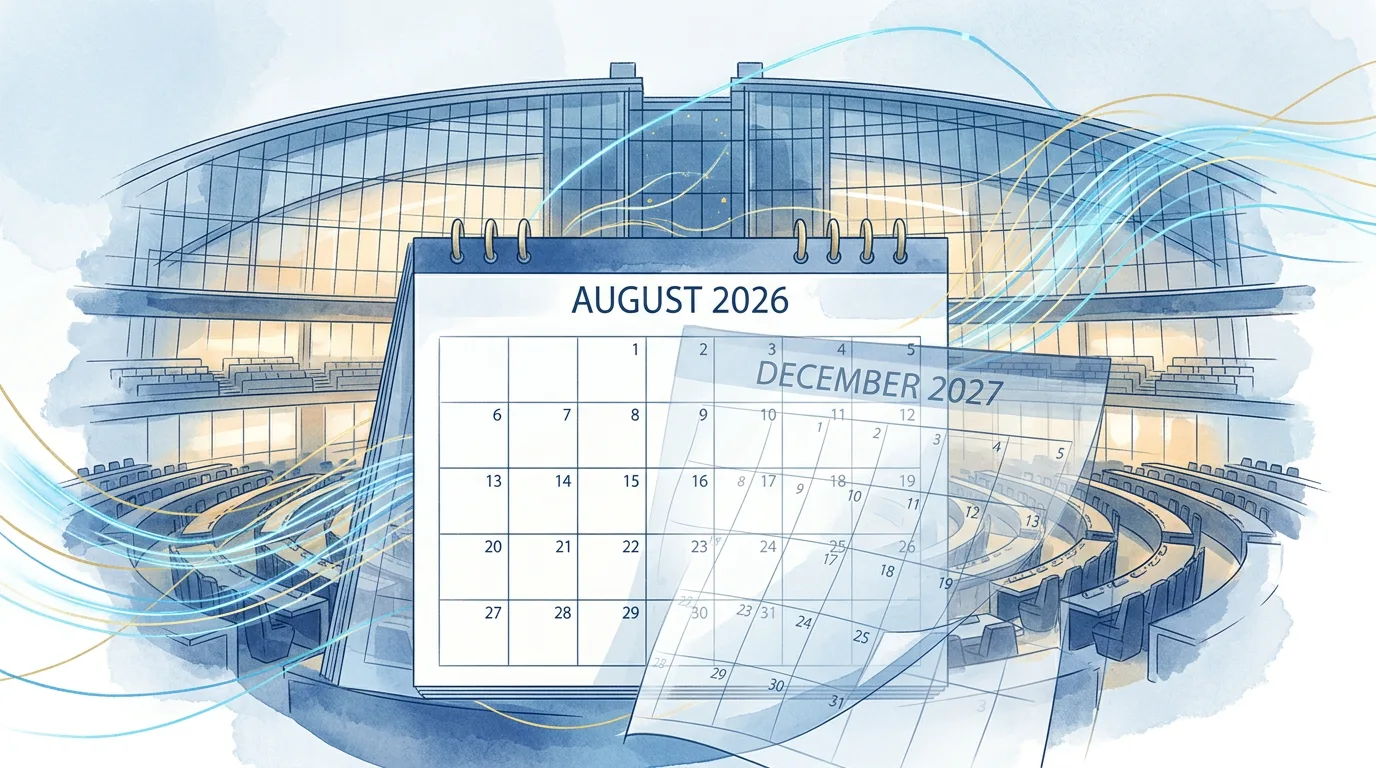
The EU AI Act in August 2026, what really changes — the real-time/retrospective facial recognition boundary and the shock of the 'Digital Omnibus'
August 2, 2026 has been billed for more than a year as the EU AI Act's most important date. But in November 2025 the European Commission unveiled its 'Digital Omnibus' package proposing to delay high-risk AI obligations by up to 16 months, and on May 7, 2026 the European Parliament and Council reached a provisional agreement. The result is more than a schedule change. The ban on real-time facial recognition survived, but retrospective facial recognition and workplace and education AI obligations are pushed beyond December 2027. Here is how the 'world's first AI regulation' wobbled, and what remained intact.

The age of AI warfare: is a world where machines decide life and death a utopia? — the reality of a battlefield where drones became artillery
In March 2026, 96% of battlefield casualties in Ukraine were caused by drones. In April, for the first time in history, an enemy position was captured by unmanned platforms alone. The way war is fought is changing, but the suffering war brings is not. When the enemy comes with drones, will we fight with hand grenades? Thoughts from a citizen of a divided nation.